 The Nearest Dentists
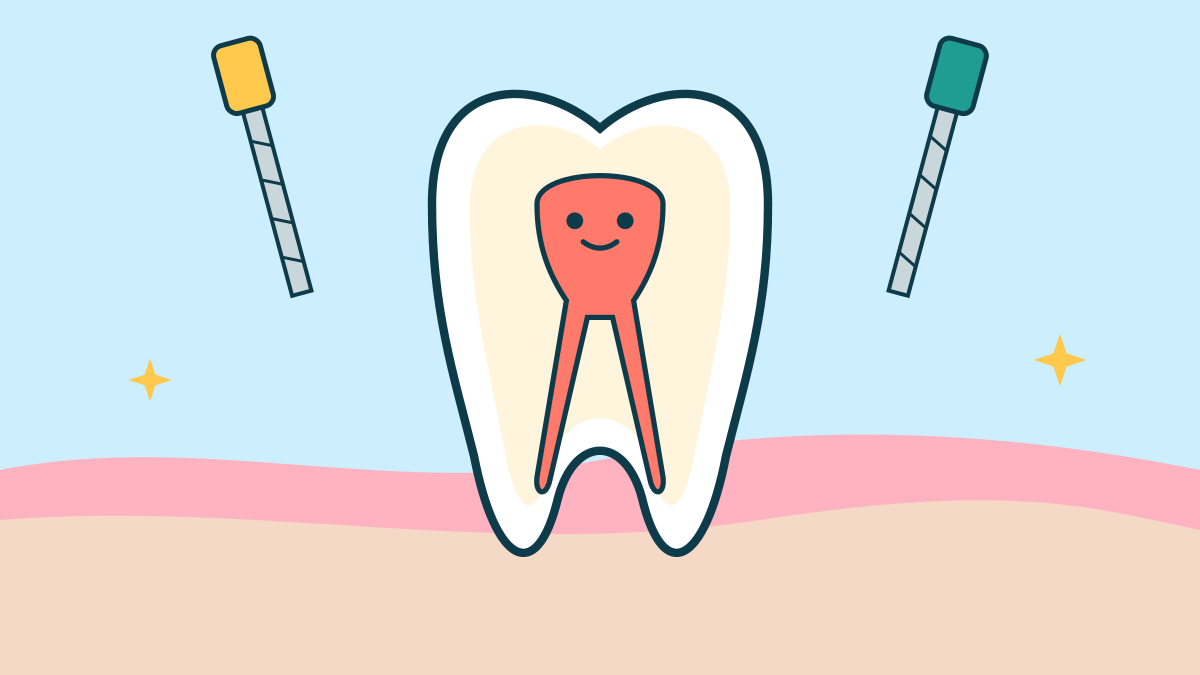
Few dental phrases carry a worse reputation than "root canal." Yet the treatment is designed to relieve pain, not cause it, and it lets you keep a tooth that might otherwise have to be pulled. Modern anaesthesia and techniques mean many people describe the experience as similar to having a large filling. Understanding what goes on can take much of the dread out of it.
Inside a tooth: the pulp
Under the hard enamel and dentin of every tooth is a space containing the pulp: soft tissue with nerves, blood vessels and connective tissue. The pulp sits in a chamber in the crown of the tooth and runs down through narrow channels in each root, called root canals. Front teeth usually have one canal; molars typically have three or more.
The pulp matters while a tooth is developing. In a fully formed adult tooth, the tooth can survive without it, because it is nourished by the surrounding tissues. That is what makes root canal treatment possible.
Why the pulp gets inflamed or infected
The pulp can become inflamed or infected when bacteria reach it or when it is injured. Common causes include:
- Deep decay that reaches the pulp.
- A crack or chip that exposes the inner tooth.
- Repeated dental work on the same tooth.
- A blow to the tooth, even if there is no visible crack.
Signs can include lingering pain after hot or cold (the ache stays for many seconds or minutes after the stimulus is gone), spontaneous throbbing pain, pain that wakes you at night, tenderness when biting, a darkened tooth, a small pimple-like bump on the gum, or swelling. Sometimes there are no symptoms, and the problem is found on an X-ray as a dark area at the root tip.
If left untreated, an infected pulp can lead to an abscess, a pocket of infection at the end of the root, which can spread and become serious. Facial swelling, fever or difficulty swallowing need urgent attention.
What happens during root canal treatment
Root canal treatment may be done by a general dentist or by an endodontist, a specialist in this area. Complex molars or retreatments are often referred to an endodontist. The steps are broadly the same:
- Diagnosis. The dentist tests the tooth's response to cold and tapping and takes X-rays to see the root shapes and any infection.
- Numbing. Local anaesthetic numbs the tooth and surrounding area.
- Isolation. A rubber dam, a small sheet held by a clamp, isolates the tooth to keep it clean and dry and to stop you swallowing solutions or tiny instruments.
- Access. A small opening is made through the top of the tooth into the pulp chamber.
- Cleaning and shaping. Thin flexible files remove the pulp tissue and shape each canal, while disinfecting solutions are used to rinse it. The dentist measures canal lengths with X-rays or an electronic device.
- Filling the canals. The cleaned canals are filled and sealed, most commonly with a rubbery material called gutta-percha and a sealer.
- Sealing the top. A temporary or permanent filling closes the access opening. Treatment can be completed in one visit or spread over two, sometimes with medication placed inside the tooth between visits.
Root canal at a glance
- Goal: remove infected or inflamed pulp, disinfect the canals, seal them, keep the tooth.
- Who does it: a general dentist or an endodontist.
- Numbing: local anaesthetic, as with a filling.
- Visits: commonly one or two.
- Afterwards: a final restoration, often a crown for back teeth.
Recovery: what is normal
For a few days, the tooth and gum may feel tender, especially when biting. This is usually manageable with over-the-counter pain relievers taken as directed on the label, if they are safe for you; check with your dentist or pharmacist, especially if you have medical conditions or take other medicines. Avoid chewing hard foods on that tooth until it has its final restoration, because a tooth with a temporary filling is vulnerable to breaking.
Contact your dentist if pain is severe or getting worse after the first few days, if swelling appears or increases, if you have a fever, if the temporary filling falls out, or if your bite feels uneven. If antibiotics were prescribed, take them exactly as instructed; note that antibiotics are not a substitute for treatment when a tooth is the source of the infection.
The final restoration matters
A root canal treats the inside of the tooth, but it does not rebuild the outside. Back teeth that have had root canals are usually weakened and commonly need a crown or onlay to protect them from cracking. Delaying the final restoration for a long time increases the risk of fracture or of bacteria leaking back into the canals. Plan the next step with your dentist before you leave.
Alternatives to consider
The main alternative to a root canal on an infected tooth is extraction. Removing the tooth ends the infection, but it leaves a gap that can affect chewing and allow neighbouring teeth to drift. Replacing a missing tooth with an implant, bridge or partial denture adds its own cost, time and trade-offs. In most cases, saving a natural tooth that has a good outlook is preferred, but the decision depends on how much healthy tooth remains, the condition of the gums and bone, and your priorities. Ask your dentist to explain the long-term outlook for the tooth and the full cost of each path, including replacement if you choose extraction.
What about the myths?
You may come across claims online that root canals cause illness elsewhere in the body. These ideas trace back to research from the early 1900s that later investigators could not reproduce, and major dental organisations do not support them. If you have concerns, raise them with your dentist; you deserve a clear, evidence-based answer.
Frequently asked questions
Is a root canal painful?
The tooth is numbed, and many people find the procedure similar to a large filling. Tenderness for a few days afterwards is common. The treatment is intended to relieve the pain of an infected tooth.
How many visits does a root canal take?
Often one or two, depending on the tooth, the amount of infection and the dentist's approach. A crown or other restoration may require further visits.
Can I just take antibiotics instead?
Antibiotics can help control spreading infection, but they do not clean out an infected pulp. The source of infection still needs treatment, either a root canal or extraction.
Will the tooth feel dead afterwards?
The tooth will no longer feel hot or cold, but you will still feel pressure through the surrounding ligament and bone, so biting feels normal.